
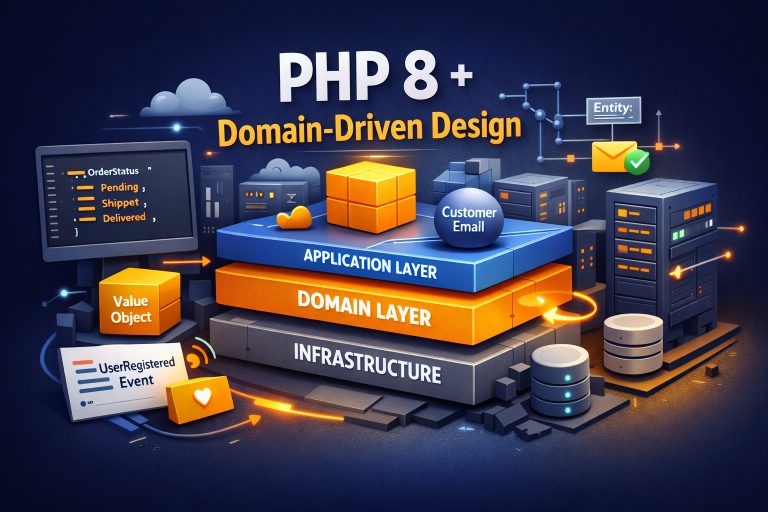

For a long time, PHP was dismissed as “just a scripting language for websites.”
That perception no longer survives in a PHP 8+ world.
Today, PHP is a modern, strongly typed, expressive language capable of supporting large, scalable, business-critical systems. And that evolution makes it a natural fit for Domain-Driven Design (DDD).
📖 Where Domain-Driven Design Comes From
Domain-Driven Design was brought into the spotlight by Eric Evans in his influential 2003 book “Domain-Driven Design: Tackling Complexity in the Heart of Software.”
DDD was born from a single, persistent problem:
👉 Software often models databases better than it models the business.
DDD flips that approach. Instead of starting with tables and CRUD operations, it asks us to model business rules, language, and behavior first.
Over the years, this philosophy introduced concepts that now feel fundamental:
- Ubiquitous Language — one shared language across developers and domain experts
- Bounded Contexts — clear borders around complex domains
- Entities & Value Objects — code that represents real business concepts
- Domain Events — explicit signals when something meaningful happens
These ideas power modern architectures—from monoliths to microservices—and PHP is finally equipped to embrace them properly.
🧩 DDD, Explained Simply
At its core, DDD is about aligning code with how the business thinks.
Instead of scattering rules across controllers, helpers, and services, business logic lives in the domain model: entities, value objects, aggregates, and domain events.
Example: an e-commerce domain
- A Product must never have a negative price
- An Order can only be shipped once
- A CustomerEmail must always be valid
These are business rules—not technical concerns—and they belong in the domain layer.
🔹 Why PHP 8 Makes DDD Practical
1. True Value Objects with Immutability
Value Objects represent concepts like Email, Money, or Coordinates. They should be immutable and self-validating.
PHP 8.1 makes this trivial:
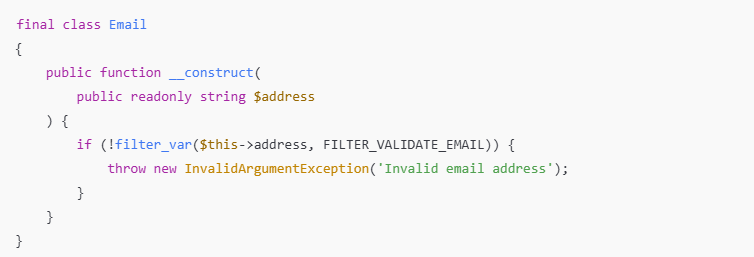
Once created, this object is always valid—and cannot be changed accidentally.
2. Enums and Union Types for Business States
Business domains are full of states and transitions. Enums finally give PHP a native way to model them:
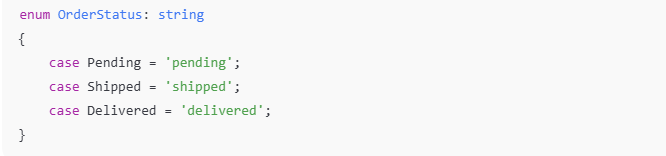
Union types further improve expressiveness:

The domain language becomes explicit, readable, and safe.
3. Types That Protect Domain Invariants
In DDD, entities must enforce their own rules. PHP 8’s strong typing helps prevent invalid states:
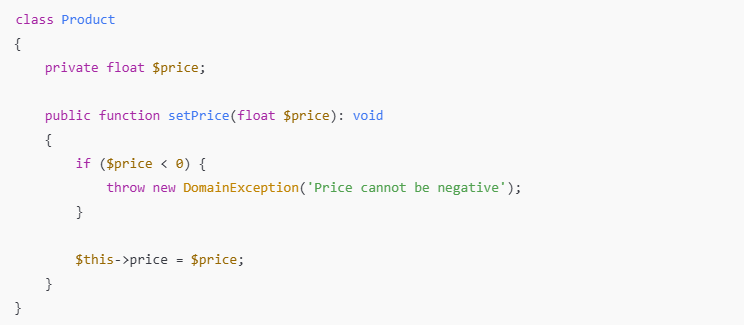
Invalid data simply cannot enter the domain unnoticed.
4. Infrastructure Without Domain Pollution
DDD demands a clean domain layer, untouched by persistence or frameworks.
PHP 8 attributes allow infrastructure details to exist without leaking into business logic:
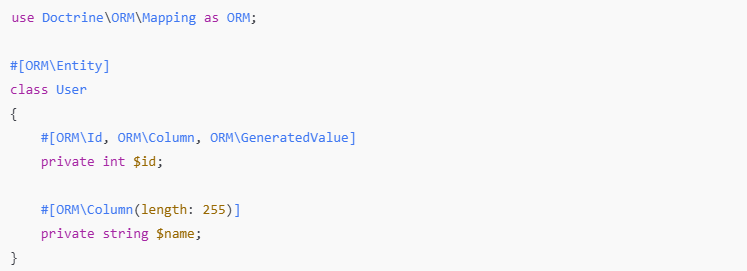
Your domain stays expressive; the infrastructure stays replaceable.
5. Domain Events and Business Flow
Events like OrderShipped, PaymentFailed, or UserRegistered represent meaningful business moments.
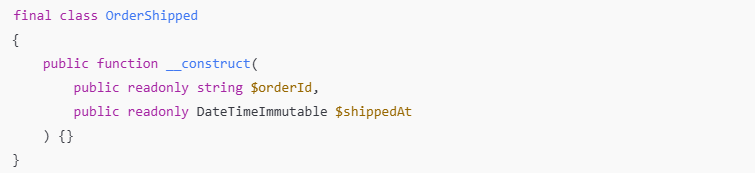
With event dispatchers, queues, or message buses, these events drive side effects—emails, notifications, integrations—without contaminating the domain logic.
📌A Clear Mental Model
DDD-oriented PHP applications typically fall into three layers:
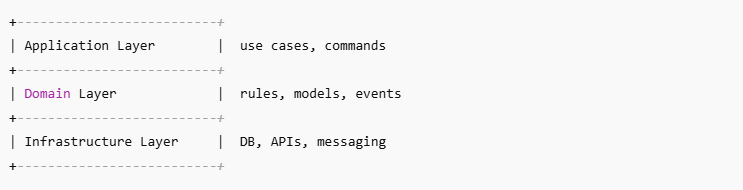
PHP 8 finally gives the domain layer the clarity and safety it deserves.
PHP is no longer a “quick scripting tool.”
With PHP 8+, it’s a serious platform for business-driven architecture.
✅ Immutable value objects
✅ Rich, expressive domain models
✅ Strong boundaries enforced by types
✅ Clean separation of concerns
✅ Event-driven business logic
The payoff?
Software that reflects reality—and remains adaptable as the business grows.
If you have any questions about your project, please write to us 🚀
We are happy to help🤝